


Mastering Watercolor Techniques for Painting Stunning Water Lilies

GREETINGS FROM UP NORTH ART STUDIO WITH LAURIE J COCHRANE
Water lilies have fascinated artists for centuries. I am very fortunate to have a natural display of water lilies outside my river studio window in July. Painting these beautiful flowers using watercolor paints offers a unique challenge and opportunity to capture their ethereal quality. Watercolors allow for soft blending, transparency, and fluidity that suit the gentle nature of water lilies perfectly. This guide will walk you through essential techniques and tips to help you create stunning watercolor paintings of water lilies, whether you are a beginner or looking to refine your skills.
Understanding Water Lilies and Their Structure
Before picking up your brush, it’s important to observe the subject carefully. Water lilies have a distinct structure:
Petals: Usually numerous, arranged in layers, often with a soft gradient of colors from white or pink to deeper shades.
Leaves: Large, oval and flat, floating on the water surface, often with visible veins.
Water surface: Reflective and sometimes showing ripples or shadows.
Studying photos or real water lilies helps you notice how light interacts with petals and leaves, which is crucial for realistic watercolor effects.
Essential Watercolor Materials for Painting Water Lilies
To achieve the best results, gather the right materials:
Watercolor paints: Choose high-quality paints with vibrant pigments.
colours I sometimes use are ultramarine blue, cobalt blue, yellow, red, hooker's green and sap green ( or mix all your own greens)
I mix a dark indigo using ultramarine blue+ burnt sienna and a little black
I mix a light mauve using ultramarine blue+ red
I mix greens with yellow+blue
Brushes: Round brushes in sizes 6 to 12 are versatile for petals and leaves. A fine detail brush helps with veins and edges.
Watercolor paper: Use 140 lb (300 gsm) cold-pressed paper for texture and durability.
Palette: For mixing colors.
Masking fluid: Optional, to preserve white areas.
Water containers and paper towels: For cleaning brushes and controlling water.
Having the right tools makes it easier to control paint flow and layering.
Preparing Your Workspace and Sketching the Composition
Set up a clean, well-lit workspace with all materials within reach. Begin with a light pencil sketch of your water lily composition on the watercolor paper. Keep lines faint to avoid showing through the paint.
Focus on:
Positioning the flower and leaves naturally.
Leaving space for water reflections.
Planning light and shadow areas.
A good sketch acts as a roadmap and saves time during painting.
Basic Watercolor Techniques for Water Lilies
Wet-on-Wet for Soft Petals
Apply clean water to the petal area, then drop in diluted paint. The colors will spread softly, mimicking the delicate texture of petals. Use this technique for the first layer to create a gentle base.
Wet-on-Dry for Details
Once the first layer dries, use wet paint on dry paper to add sharper edges, veins, and shadows on petals and leaves. This technique helps define shapes and adds depth.
Layering and Glazing
Build color gradually by applying multiple transparent layers. Let each layer dry before adding the next. This method enhances luminosity and richness without muddying colors.
Dry Brush for Texture
Use a dry brush with minimal paint to add texture on leaves or water ripples. This technique creates contrast and interest.
Mixing Colors for Realistic Water Lilies
Water lilies come in various shades, often soft pinks, whites, yellows, and greens. Here are some useful mixes:
Petals: Mix rose madder or quinacridone pink with a touch of cobalt blue for cooler shadows.
Leaves: Combine sap green with touches of burnt sienna or ultramarine blue for natural variation.
Water reflections: Use diluted blues and greens with hints of the flower colors to reflect petals on water.
Test your mixes on scrap paper before applying to your painting.
Step-by-Step Guide to Painting a Water Lily
Sketch lightly the flower, leaves, and water surface.
Apply a wet-on-wet wash of pale colors on petals and leaves.
Add mid-tone layers with wet-on-dry technique to define shapes.
Paint shadows and veins with a fine brush using darker mixes.
Create water reflections by mirroring colors softly below the flower.
Add highlights by lifting paint with a damp brush or using masking fluid before painting.
Use dry brush strokes to add texture to leaves and water ripples.
Let the painting dry completely before making final adjustments.
Tips for Capturing Light and Reflection
Water lilies often float on reflective water surfaces, so capturing light and reflections is key:
Observe how petals catch sunlight and where shadows fall.
Use lighter washes for highlights and avoid overworking these areas.
Paint reflections with softer edges and slightly muted colors.
Add subtle ripples with horizontal brush strokes to suggest water movement.
Common Challenges and How to Overcome Them
Colors bleeding too much: Control water amount on paper and brush. Use less water for sharper edges.
Muddy colors: Avoid mixing too many pigments together. Use transparent layers.
Losing petal shape: Use masking fluid or paint around white areas carefully.
Flat appearance: Build layers gradually and add shadows for depth.
Practice and patience help overcome these issues.
Exploring Creative Variations
Once comfortable with realistic water lilies, try experimenting:
Use bold color palettes for an abstract effect.
Paint close-ups focusing on petal details.
Incorporate background elements like dragonflies or lily pads.
Try different paper textures for unique effects.
Creative freedom makes watercolor painting more enjoyable.
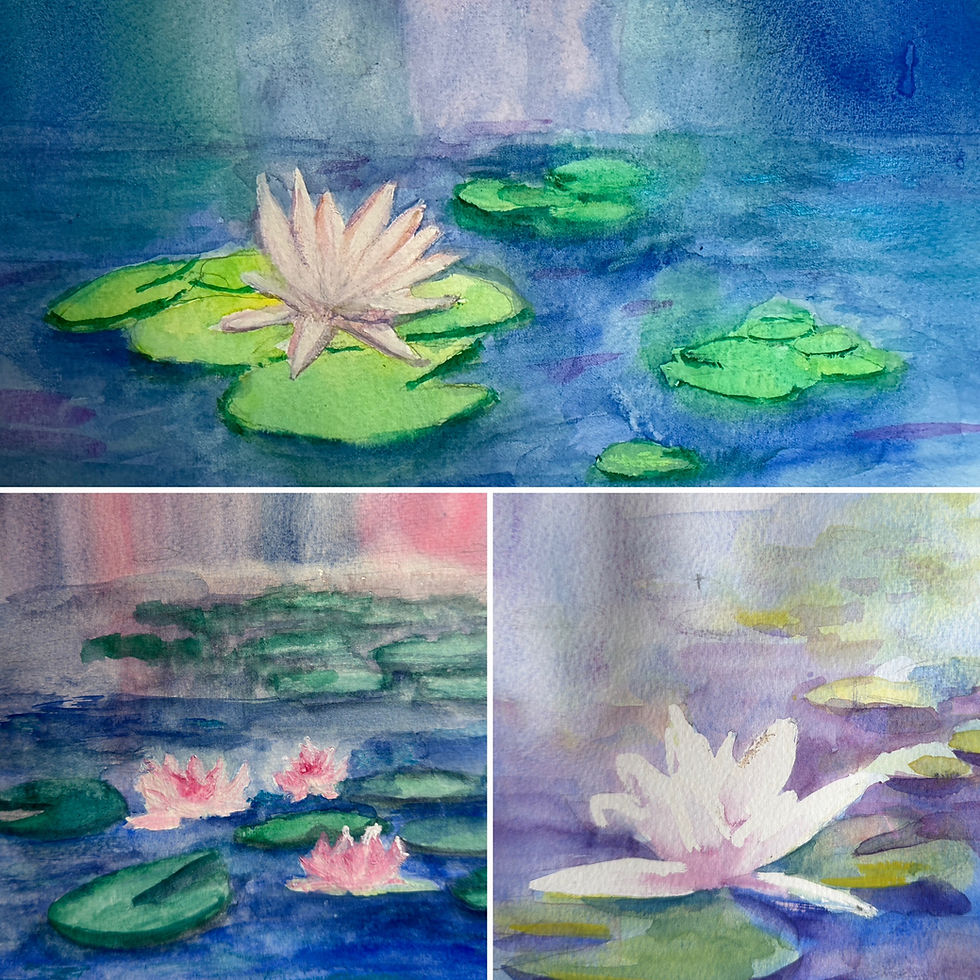
Fearless paintings by students who in just
three hours were able to create these stunning
small water lily studies.


Comments